

The Question We Should Be Asking: What’s the Worst That Could Happen?
Reflections on the fears we create in our minds that hold us back from doing what we know we should.

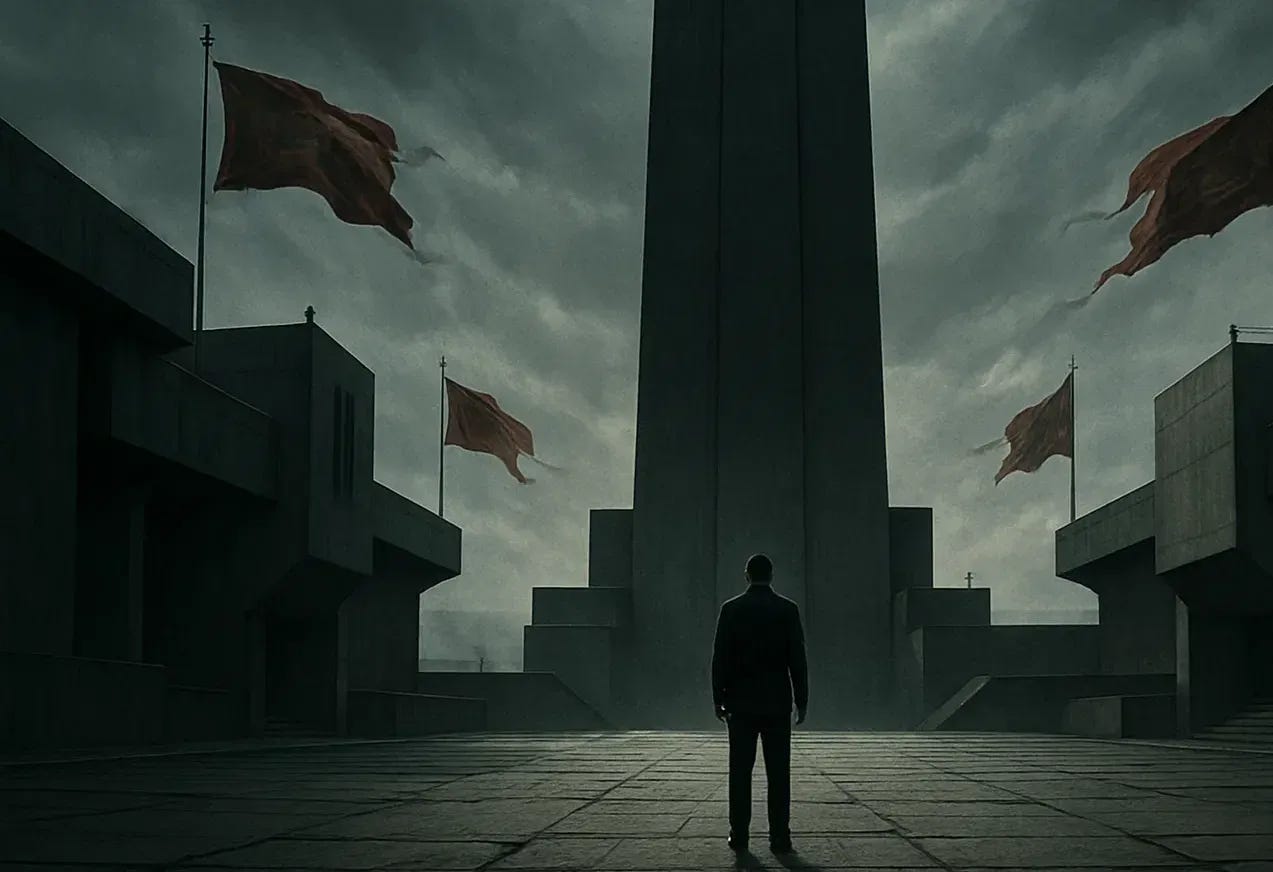
A good writer or filmmaker knows that the human imagination is far more powerful than any words or images could ever be. It’s what’s left unsaid that often stirs or frightens us the most. And that holds true—perhaps even more so—today, despite the visual onslaught we face daily on the internet.
This insight reveals that we are our own worst enemies when it comes to taking a stand or simply speaking our minds. We often back down because of the scary scenarios we paint in our own heads. Rarely is our fear rooted in anything real or tangible.
Yes, it’s true that Swedish nationalists have faced their share of harsh treatment. Among my own friends and acquaintances, some have lost jobs, been threatened, or even attacked. But on the whole, these are exceptions. For most people, getting involved in nationalist politics comes with few or no problems.
—
Imagination is fascinating. It takes tiny fragments of things that have happened to others and turns them into a terrifying mosaic. I’m no different—on the contrary, I’ve had my fair share of discomfort after being labeled with every emotion-charged word you can think of, whether it happened at school, among friends, at work, or in the media.
Early on—in my early teens—the attention felt thrilling. But as I got older and became a father, I began to wonder whether my children might somehow be affected by my activism. I worried about work, housing, and what might happen if I were publicly “exposed.” But quitting—even for a moment—was never an option. And thankfully, no one (by which I mean girlfriends) ever demanded that I do.
-
The first time I was publicly “outed” with a big photo and my full name in the press, I became paranoid for a while. It felt like everyone was looking at me. But they weren’t. Most people are far too busy to remember someone like Magnus Söderman just because he was exposed in an article. (The realization of how small our nationalist bubble really is, and how few people know who I am even after more than 30 years in the trenches, is both amusing and a bit sobering.)
I understand that I’m not like most people. I’ve been more or less publicly involved for a long time. My life has revolved around our nationalist cause since before I even moved out of my parents’ house. I never aimed for a traditional career. I’ve lived modestly. Comfort and salary have never mattered much to me. No, it’s not a lifestyle I recommend to everyone—in fact, quite the opposite.
But enough about me and my lack of horror stories.
-
The truth is that for most people, nothing bad happens at all when they take a stand or speak up for what they believe. Most people are so indifferent that you can’t even get a decent conversation going in the break room.
Yes, how you present yourself matters. Yes, what you say matters. Yes, how you say it matters. Yes, context matters. I’m speaking in broad strokes here—I shouldn’t have to explain that.
So, back to the beginning: What’s the worst that could happen? If we’re being realistic—and we should be—not much. Someone might think you’re wrong. Maybe even a bit odd. Maybe someone won’t say hi to you next time you pass on the street. Maybe you won’t get invited to your friend’s friend’s birthday party.
You can live with that. Honestly, it’s a small price to pay for standing up for yourself. And I don’t just mean politically—I mean in general. Owning your thoughts and your will is owning yourself. That’s what integrity is.
The worst that could happen really isn’t that bad.
—
The best that could happen, though—that’s something amazing. You grow. As a person. As an individual. As yourself. People listen to you. You matter. You influence others. And yes, this also applies when you stand up for our nationalist cause.
I’m not saying you need to become some holy crusader, a public speaker, or that you should lead the charge and be the last to leave the battlefield. Not at all. That path demands more than most can or should give—and few are called to it. But you should support those of us who are. You should have our backs when it counts.
That’s the least we can expect.
